
Learning to ski or snowboard for the first time is exciting, but it also comes with a learning curve. Most beginners make the same mistakes, and while they’re completely normal, some can slow your progress or make your first days on the mountain more frustrating than they need to be.
The good news? Most beginner skiing and snowboarding mistakes are easy to avoid once you know what to expect.
Here are the most common mistakes first-timers make — and how to avoid them.
1. Skipping Lessons
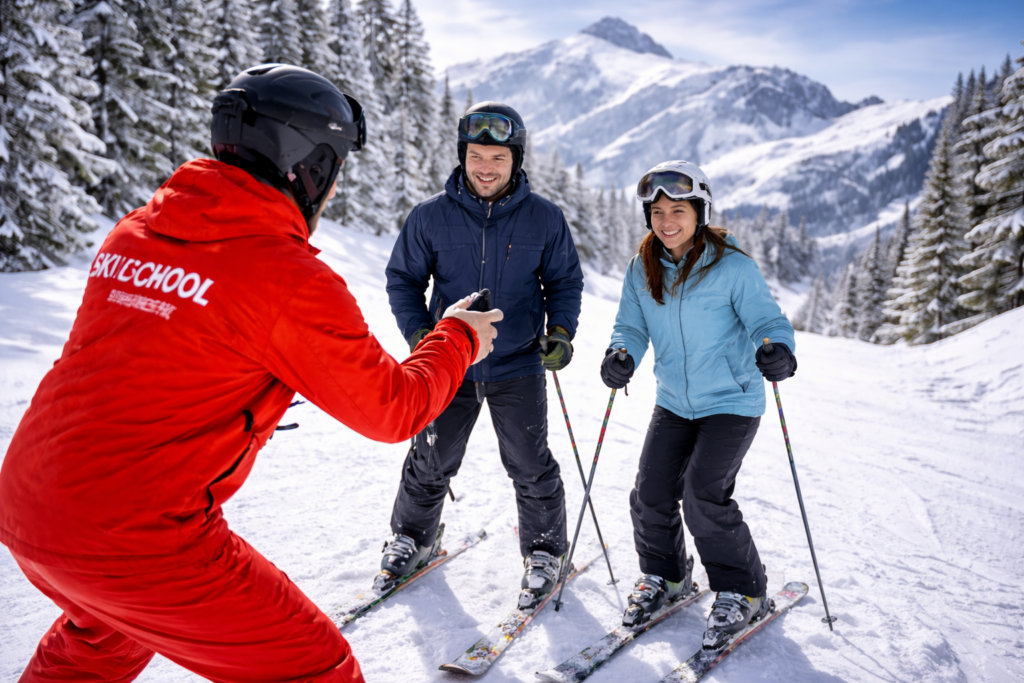
One of the biggest mistakes beginners make — whether skiing or snowboarding — is trying to learn without lessons.
Friends and family often mean well, but they’re rarely trained to teach beginners. A professional instructor will help you:
- Learn how to stop safely
- Control speed and direction
- Understand basic technique
- Fall and get up safely
Even a half-day lesson can dramatically improve confidence and enjoyment.
Related read: First Time Skiing or Snowboarding: What to Expect – Blog | Alpy.com
2. Starting on Slopes That Are Too Difficult
Many beginners feel pressure to “keep up” with friends and move on too quickly.
This often leads to:
- Fear
- Loss of control
- More falls
Beginner (green) slopes exist for a reason. Staying on them longer helps both skiers and snowboarders build balance, control, and confidence faster.
3. Wearing the Wrong Clothing
Cold, wet, or uncomfortable clothing can ruin a ski or snowboard day very quickly.
Common beginner mistakes include:
- Wearing cotton layers
- Too many thick socks
- Non-waterproof pants or jackets
Instead, focus on:
- Waterproof outer layers
- Thermal base layers
- One pair of proper ski or snowboard socks
Helpful read: What to Wear: The Ultimate Layering Guide for Staying Warm on the Mountain – Blog | Alpy.com
4. Using the Wrong Rental Equipment
Many beginners assume:
- Longer skis or boards are better
- Stiffer boots mean more control
- Premium gear equals better performance
In reality, beginner-friendly equipment is:
- Easier to control
- More forgiving
- Designed to help you learn
Properly fitted rental equipment — especially boots — makes a huge difference for both skiers and snowboarders.
5. Leaning Back (or Sitting Too Far Back)
This mistake looks different depending on the sport:
- Skiers tend to lean back
- Snowboarders often sit too far back on the board
Both reduce control and make turning harder.
Balanced posture — centered over your feet — improves stability, turning, and confidence. It feels unnatural at first, but it’s key to progressing.
6. Skiing or Snowboarding When You’re Too Tired
Both skiing and snowboarding are physically demanding, especially for beginners.
Fatigue leads to:
- Poor technique
- Slower reactions
- Higher risk of falls
Take regular breaks, stay hydrated, and stop before exhaustion sets in. Progress comes faster when your body isn’t overwhelmed.
7. Being Afraid of Falling
Falling is part of learning — especially for snowboarders in the first days.
Beginner slopes are designed to be forgiving, and instructors teach how to fall safely. Trying to avoid falling at all costs often creates tension and makes learning harder.
Accepting small falls helps you relax — and improve faster.
8. Comparing Yourself to Others
Everyone learns at a different pace.
Comparing yourself to friends, family, or other beginners often leads to frustration. Focus on your own progress instead — even small improvements matter.
FAQ
1. How many days does it take to learn skiing or snowboarding as a beginner?
Most beginners can learn the basics of skiing or snowboarding within 2–3 days. During this time, many people learn how to stop, control speed, and make simple turns on beginner slopes. Taking lessons and practicing consistently helps accelerate the learning process and build confidence on the mountain.
2. Is skiing or snowboarding better for first-time beginners?
Both sports are beginner-friendly, but many people find skiing slightly easier during the first days because balance feels more natural with two skis. Snowboarding may feel harder at first, but many riders progress quickly after the initial learning stage.
3. What fitness level do you need to start skiing or snowboarding?
You don’t need to be an athlete to start skiing or snowboarding for the first time, but basic fitness helps. Strength in the legs, good balance, and endurance make learning easier. Light preparation such as walking, cycling, or simple leg exercises before your trip can make your first days on the mountain more enjoyable.
4. How do beginners control speed while skiing or snowboarding?
Speed control is one of the first skills beginners learn. Skiers typically use a snowplow or wedge technique, while snowboarders learn to control speed by shifting edges and making controlled turns across the slope. Professional instructors teach these techniques early in beginner lessons.
5. When is the best time of day for beginners to ski or snowboard?
Morning is usually the best time for beginners. Slopes are typically less crowded, snow conditions are more predictable, and visibility is better. Early sessions also help beginners avoid fatigue that often appears later in the afternoon.
6. Do beginners need to buy ski gear or is renting better?
For first-time skiers and snowboarders, renting equipment is usually the best option. Rental shops provide beginner-friendly skis, snowboards, and boots that are easier to control. Renting also allows you to try different gear before deciding whether to invest in your own equipment later.
7. How can beginners avoid getting too tired on the slopes?
Beginners often underestimate how physically demanding snow sports can be. Taking regular breaks, drinking water, and eating small snacks throughout the day helps maintain energy. Starting with shorter sessions on the slopes and gradually increasing time skiing or snowboarding can prevent exhaustion.
8. What should beginners do if they feel nervous on the slopes?
Feeling nervous when learning to ski or snowboard is completely normal. Beginners should focus on slow progression, staying on beginner slopes, and practicing basic movements repeatedly. Taking lessons with a certified instructor and skiing with supportive friends can also help build confidence quickly.
Final Thoughts
Making mistakes is part of learning to ski or snowboard, but avoiding the most common beginner errors can make your first mountain experience far more enjoyable.
With proper lessons, the right rental equipment, realistic expectations, and good preparation, both skiing and snowboarding become less intimidating and much more fun.
A little planning goes a long way, especially when it comes to gear, clothing, and pacing yourself on the slopes. Booking your rental equipment in advance with alpy.com also helps ensure you start your trip with properly fitted skis or a snowboard, so you can focus on learning and enjoying your time on the mountain.