
First Time Skiing or Snowboarding: What to Expect
Going skiing or snowboarding for the first time is exciting — but it can also feel a bit intimidating. New gear, unfamiliar terms, cold weather, and the fear of falling can make the experience seem overwhelming.
That said, everyone starts as a beginner, and ski resorts work hard to make your first day on the mountain as smooth as possible.
This guide explains what to expect when skiing or snowboarding for the first time — from your first morning to your first runs — so you can arrive prepared and confident.
Expect to Feel Awkward at First (That’s Normal)
Your first day on skis or a snowboard will feel… unusual.
For skiers:
- Boots feel stiff
- Walking feels unnatural
- Skis may slide when you don’t want them to
For snowboarders:
- Both feet are strapped into one board
- Standing can feel unstable
- Getting on and off lifts takes practice
In reality, this is completely normal. Both skiing and snowboarding use muscles and balance in ways most people aren’t used to.
The goal of your first day isn’t to be perfect — it’s to get comfortable.
You’ll Start on Beginner Slopes Only
Every ski resort has dedicated beginner areas, often called nursery slopes or green slopes.
These areas typically include:
- Flat or very gentle terrain
- Magic carpets or slow chairlifts
- Wide, open spaces
As a result, you won’t be sent straight onto steep terrain. Instead, instructors and resort layouts guide beginners safely at their own pace.
Ski or Snowboard Lessons Are Strongly Recommended
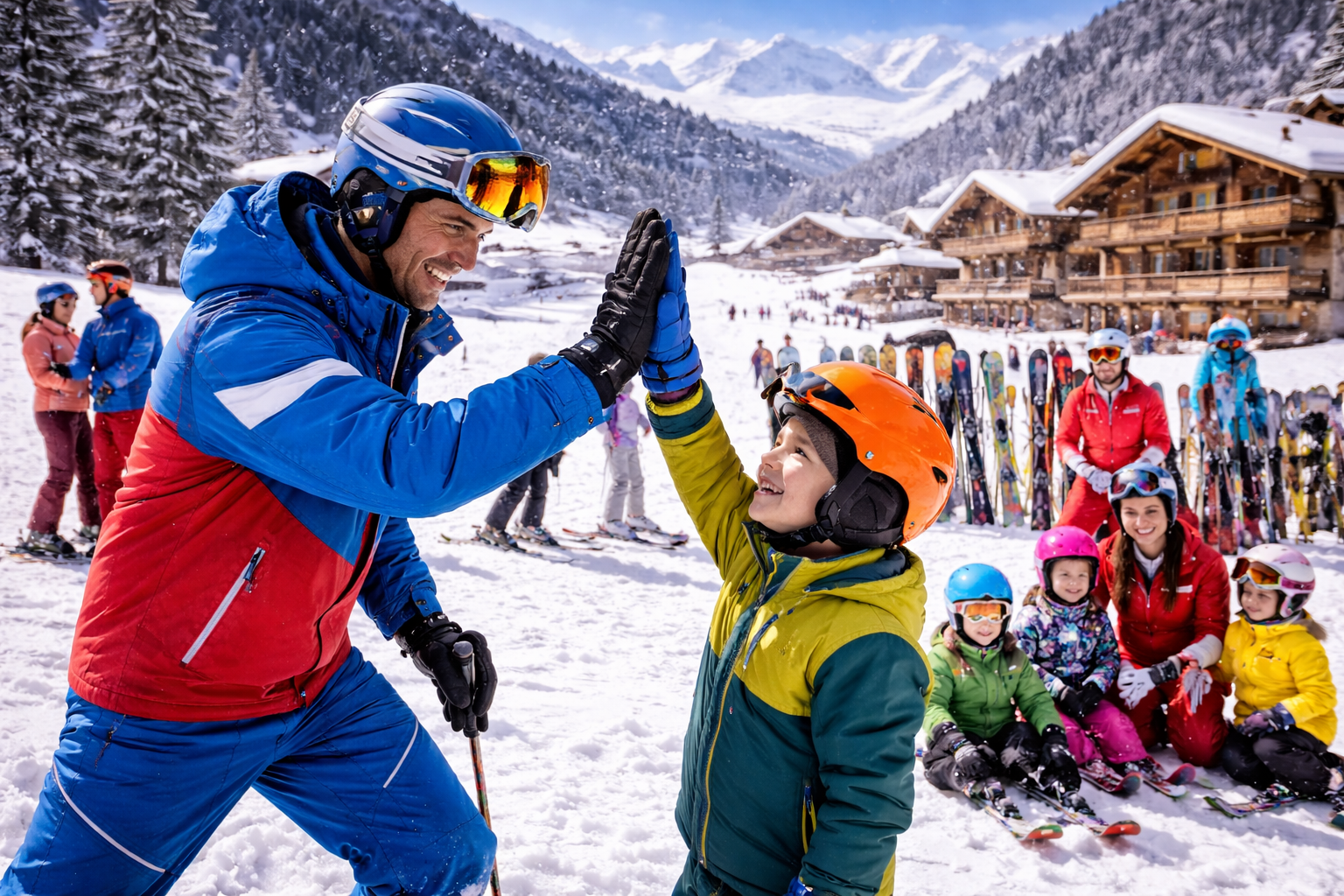
Taking a lesson is one of the best decisions you can make when trying skiing or snowboarding for the first time.
A beginner lesson will teach you:
For skiers:
- How to put skis on and take them off
- How to stop safely (snowplow/pizza)
- How to turn
- How to get up after falling
For snowboarders:
- How to strap in and move safely
- How to balance on heel and toe edges
- How to control speed and stop
- How to fall and get back up
In fact, even a half-day lesson can make the rest of your trip far more enjoyable.
Rental Equipment Is Designed for Beginners
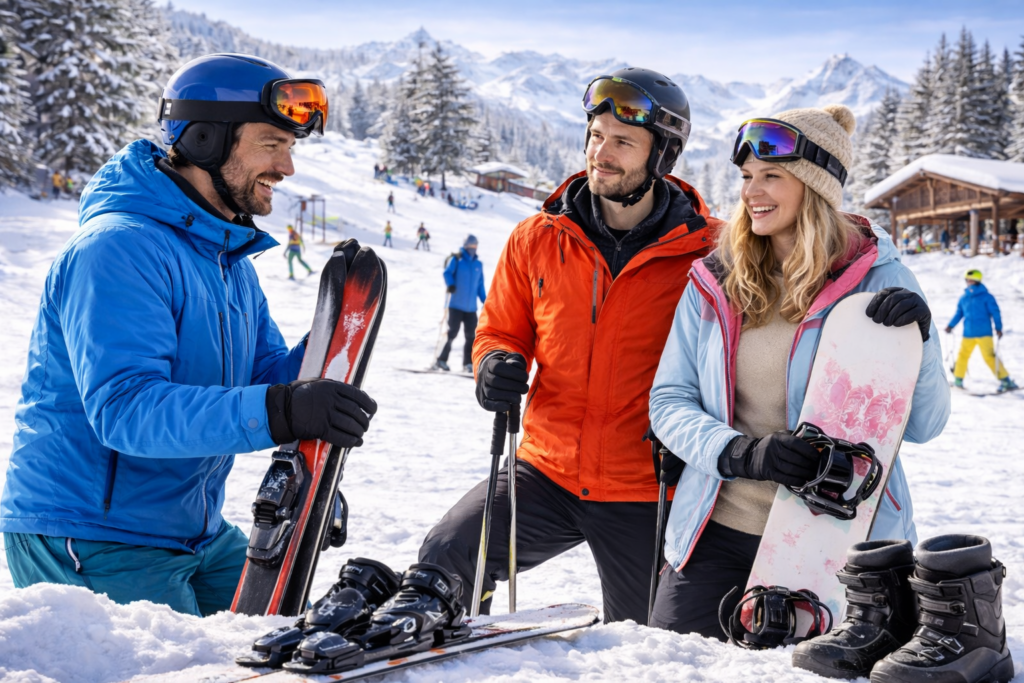
Beginner ski and snowboard equipment is specifically designed to help you learn faster and more comfortably.
Beginner skis are:
- Shorter
- More flexible
- Easier to control
Beginner snowboards are:
- Softer and more forgiving
- Easier to turn at low speeds
- Designed to reduce edge-catching
The rental shop adjusts boots and bindings to prioritise comfort and safety.
As a result, you get equipment that supports learning rather than making it harder.
Booking your equipment online before arrival also helps ensure:
- The right sizes are available
- Less waiting time in resort
- Easier adjustments if needed
Falling Is Part of Learning (and It’s Usually Fine)
Yes — you will probably fall. Everyone does.
Snowboarders often fall more on day one while learning balance. Skiers, on the other hand, tend to fall while practising turns and stopping.
Even so, beginner slopes are gentle, and instructors teach you how to:
- Fall safely
- Get back up
- Avoid injury
Most falls happen at low speed and are harmless. The key is to take breaks and avoid pushing too hard too quickly.
Expect Tired Legs (Very Tired)
Skiing and snowboarding use muscles you don’t normally activate, especially:
- Thighs
- Calves
- Core
- Glutes
Snowboarders may also feel strain in their wrists, while skiers often notice it in their inner thighs.
Because of this, feeling sore after your first day is completely normal.
Stretching, staying hydrated, and stopping before exhaustion will help you recover faster.
What to Wear on Your First Ski or Snowboard Day
You don’t need expensive gear, but you do need the right layers.
Make sure you have:
- Waterproof jacket
- Waterproof pants
- Thermal base layers
- Warm socks (not too thick)
- Gloves or mittens
- Goggles
- Helmet (highly recommended)
Most importantly, avoid cotton — it absorbs moisture and makes you cold.
First-Time Skiing & Snowboarding FAQ
Is skiing or snowboarding harder for beginners?
Generally speaking, skiing is easier to pick up at the beginning, especially for balance and stopping. Snowboarding, however, has a steeper initial learning curve but often feels more natural after a few days.
Should I ski or snowboard as a beginner?
Both are great options. For quicker early progress, skiing tends to feel easier. Alternatively, if you prefer a board-sport feel (like surfing or skateboarding), snowboarding might suit you better.
Do I need to be fit?
You don’t need to be extremely fit. However, a basic level of fitness will help you progress faster and enjoy longer sessions on the slopes.
Is it better to rent or buy equipment for the first time?
In most cases, renting is the better option. It’s more affordable, more flexible, and gives you access to beginner-friendly equipment without commitment.
How many days does it take to learn?
Most beginners can comfortably ski gentle slopes or link basic snowboard turns after 1–2 days with lessons.
Final Thoughts
Your first time skiing or snowboarding doesn’t need to be perfect to be fun.
Expect:
- A learning curve
- A few falls
- Tired legs
But also expect:
- Fresh mountain air
- Beautiful views
- A real sense of achievement
Ultimately, with beginner-friendly slopes, proper lessons, and the right equipment prepared in advance, your first mountain experience can be truly unforgettable.
Plan ahead, stay relaxed — and your first ski or snowboard trip is far more likely to turn into your second.
To make your first trip even easier, compare and book your ski or snowboard rental in advance on alpy.com for the best prices — and subscribe to our newsletter to get exclusive deals, early access to discounts, and insider tips for your next ski holiday.