
What are last-minute spring ski deals? Last-minute spring ski deals are discounted packages, accommodation bookings, lift passes, and equipment rentals available in the weeks immediately before or during the spring ski season (typically March–May). As ski resorts approach the end of their season and accommodation providers aim to fill remaining capacity, prices drop significantly across the board — often 30–50% below peak-season rates. Skiers who can travel flexibly in April or May can take advantage of some of the lowest prices of the year while still enjoying excellent conditions at higher-altitude resorts.
It’s April. The snow reports from the high Alps are still looking good. And if you’ve been following lift pass prices, accommodation rates, and travel costs over the past few weeks, you’ve probably noticed something: spring is when the deals arrive.
This isn’t a coincidence. Every year, as the half-term crowds thin out after February and the Easter rush subsides, European ski resorts enter a quieter final chapter of the season. Hotels, ski schools, and operators all want to fill remaining capacity — and that means the prices that felt impossible in January are suddenly very achievable in April.
This guide walks you through exactly how to find and book a last-minute spring ski holiday that actually saves you money — including why booking your ski rental through alpy.com now is one of the smartest moves you can make.
Why Spring Skiing in the Alps is Your Best Deal
The ski industry has a well-known peak season for a reason: Christmas, February school holidays, and Easter are when most families and working adults can travel. But from a purely skiing perspective, these are rarely the best weeks to be on the mountain.
In April and early May, you get longer daylight hours — sunrise at 6am and sunset after 7pm means full skiing days without the short winter light window. Temperatures are warmer and more comfortable, especially at altitude. The slopes are less crowded, which means shorter lift queues, more space on the pistes, and a more relaxed overall experience. And in 2026, the Alps have had an exceptionally strong late-season snowfall, meaning conditions at altitude are genuinely excellent.
The one caveat: you need to choose the right resort. Lower-altitude resorts may have patchy or slushy conditions by mid-April. The key is to target high-altitude resorts where the skiing is reliably good into late April and beyond.
Where to Ski in April and May: Best High-Altitude Resorts
Not every resort is still worth visiting in April. Here are the best high-altitude options still offering strong spring conditions:
Val Thorens, France (2,300 m). The highest resort in the Alps and consistently one of the last to close. Reliable snow into late April, with the resort typically open until late April or early May. Perfect for serious spring skiing at a major resort with full amenities.
Tignes, France (2,100 m). The Tignes glacier area opens as early as summer and provides exceptional late-season snow. Tignes typically remains open until late April or May, with strong spring conditions. Accommodation prices in Tignes drop noticeably in April.
Les Deux Alpes, France (1,650 m–3,600 m). The glacier at Les Deux Alpes (reaching 3,600 m) provides excellent spring skiing, with the upper mountain often the best skiing available in April across the French Alps.
Hintertux Glacier, Austria (3,250 m). The only glacier in Austria that is open 365 days a year. Hintertux in April is an exceptional value proposition — full skiing in spring, often with good conditions right up to the base. [VERIFY current season status]
Saas-Fee, Switzerland (3,500 m). One of the highest year-round skiing destinations in Europe. Saas-Fee’s April conditions are consistently among the best in the Alps — though Switzerland tends to be more expensive overall than Austria or France.
How to Find the Best Last-Minute Spring Ski Deals
Finding a genuinely good last-minute deal requires knowing where to look and moving quickly when you find something worth booking. Here’s how to approach it:
1. Book accommodation directly with the hotel or apartment
In the final weeks of the season, many mountain hotels and apartments drop their rates significantly and are willing to negotiate directly. Check booking platforms for last-minute rates, but then also try calling the property directly — sometimes they’ll match or beat the online rate and throw in extras like late checkout or parking.
2. Use flexible travel dates
The biggest single factor in spring ski pricing is flexibility. If you can travel mid-week (arriving Tuesday, leaving Saturday) rather than the standard Saturday-to-Saturday pattern, you can save 20–40% on both flights and accommodation. April is generally a low-season period for travel to Alpine airports, meaning flight prices are significantly lower than in February.
3. Buy your lift pass at the resort for spring-only deals
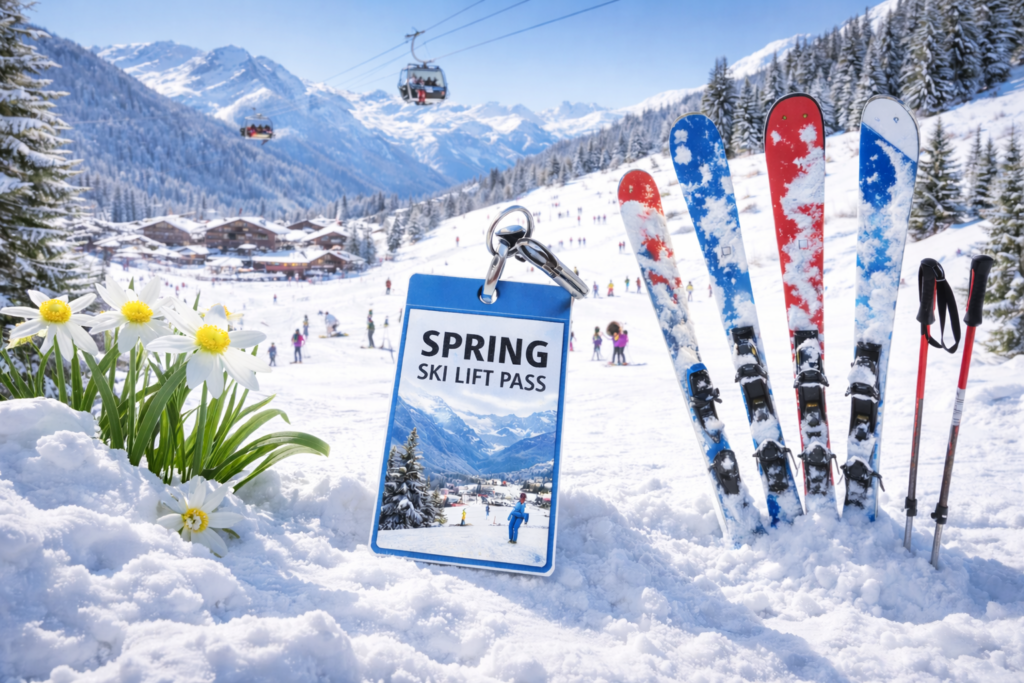
In spring, many resorts introduce special rates — half-day passes, late-morning-only passes, or reduced multi-day passes — that aren’t always available through third-party booking platforms. Check the resort’s official website in the week before you travel for the latest spring pass pricing.
4. Pre-book your ski rental online
This is the single most reliable way to save money on a ski holiday at any time of year. Booking your ski or snowboard rental through alpy.com before you travel saves up to 65% compared to walking into a shop at the resort. In spring, shops near popular resorts are typically well-stocked and waiting for business — but pre-booking still guarantees your sizes and avoids any last-minute uncertainty. Free cancellation means there’s no risk in booking early.
If you’re not sure how the online rental process works end-to-end, check out our online ski rental guide and our guide to the cheapest time to ski in the Alps covers more about how to time and budget a ski holiday efficiently.
5. Look for package deals from tour operators
Many ski-specialist travel operators offer heavily discounted late-availability packages combining flights (or drive packages), accommodation, and sometimes lift passes. These can represent exceptional value in April, particularly for popular Austrian and French resorts where the operator has remaining unsold inventory to shift.
6. Consider driving instead of flying
If you’re travelling from the UK, Netherlands, Belgium, or Germany, driving to the Alps in April can be significantly cheaper than flying — especially with a group of 4 or more people sharing fuel and road toll costs. April road conditions through the Alps are generally good, with most mountain passes clear of snow by mid-April.
What to Expect from Spring Snow Conditions
Spring snow is different from mid-winter snow, and understanding what to expect will help you enjoy it rather than be surprised by it.
At higher altitudes (above 2,000 m), early morning conditions in April are typically firm and groomed — excellent for carving and faster skiing. As the day warms up (usually from around 11am), the surface softens into what’s called “spring snow” or “corn snow”: a loose, slightly granular texture that is forgiving, fun, and popular with recreational skiers. By mid-afternoon at lower elevations, the snow can become quite slushy — experienced spring skiers plan their runs to be at altitude by mid-afternoon or finish for the day by 2–3pm.
The key rule for spring skiing: ski in the morning, eat a long lunch, and head back up or down in the afternoon. Lifts are uncrowded, the light is better, and the après-ski terraces are full of people enjoying the sunshine.
Spring Ski Packing List: What’s Different in April
Packing for a spring ski trip is slightly different from a January or February holiday:
- Lighter base layers: Temperatures are warmer — lightweight synthetic or merino base layers are sufficient; heavy thermal layers are usually overkill by April.
- Sunscreen: The spring sun at altitude is stronger than in winter. Factor 50 sunscreen is essential, especially for reflected UV from the snow.
- Sunglasses AND goggles: Pack both. Mornings may call for goggles; afternoons are often perfectly fine with sunglasses.
- Waterproof layer: Spring conditions can include slush and afternoon melt — waterproof ski trousers are more important than ever.
- T-shirt for après-ski: Mountain terrace temperatures in April can reach 15–20°C in the afternoon sunshine.
FAQ: Last-Minute Spring Ski Deals
Q: Are ski resorts cheaper in April?
A: Yes — significantly. Accommodation in Alpine resorts typically drops 30–50% from February peak rates by April. Lift passes at many resorts are also reduced in spring. The main exception is high-altitude glacier resorts that remain popular year-round; these may show less of a discount. Budget-conscious skiers consistently find April one of the most affordable times of year to ski in the Alps.
Q: Is it worth skiing in May?
A: Yes, at the right resorts. High-altitude glacier resorts such as Val Thorens, Tignes, Les Deux Alpes glacier, Hintertux, and Saas-Fee offer excellent conditions in May. Mid-altitude resorts (below 2,000 m) are typically closing or already closed by late April. If you can target the right resort, May skiing can offer extraordinary value and fantastic snow.
Q: What’s the best way to save money on a last-minute ski trip?
A: The most effective combination is: (1) flexible travel dates mid-week rather than weekends; (2) pre-booking ski rental online through alpy.com to save up to 65%; (3) buying lift passes directly at the resort using spring pricing; and (4) booking accommodation last-minute directly with the property for the best rate. Driving instead of flying saves further if you’re travelling in a group.
Q: Which European ski resorts are still open in April 2026?
A: As of April 2026, high-altitude resorts still operating include Val Thorens, Tignes, Les Deux Alpes (France), Hintertux Glacier (Austria), Saas-Fee and Zermatt (Switzerland), and several resorts in the Dolomites. Always verify current closing dates on the resort’s official website as these can change based on snow conditions.
Q: Is spring skiing good for beginners?
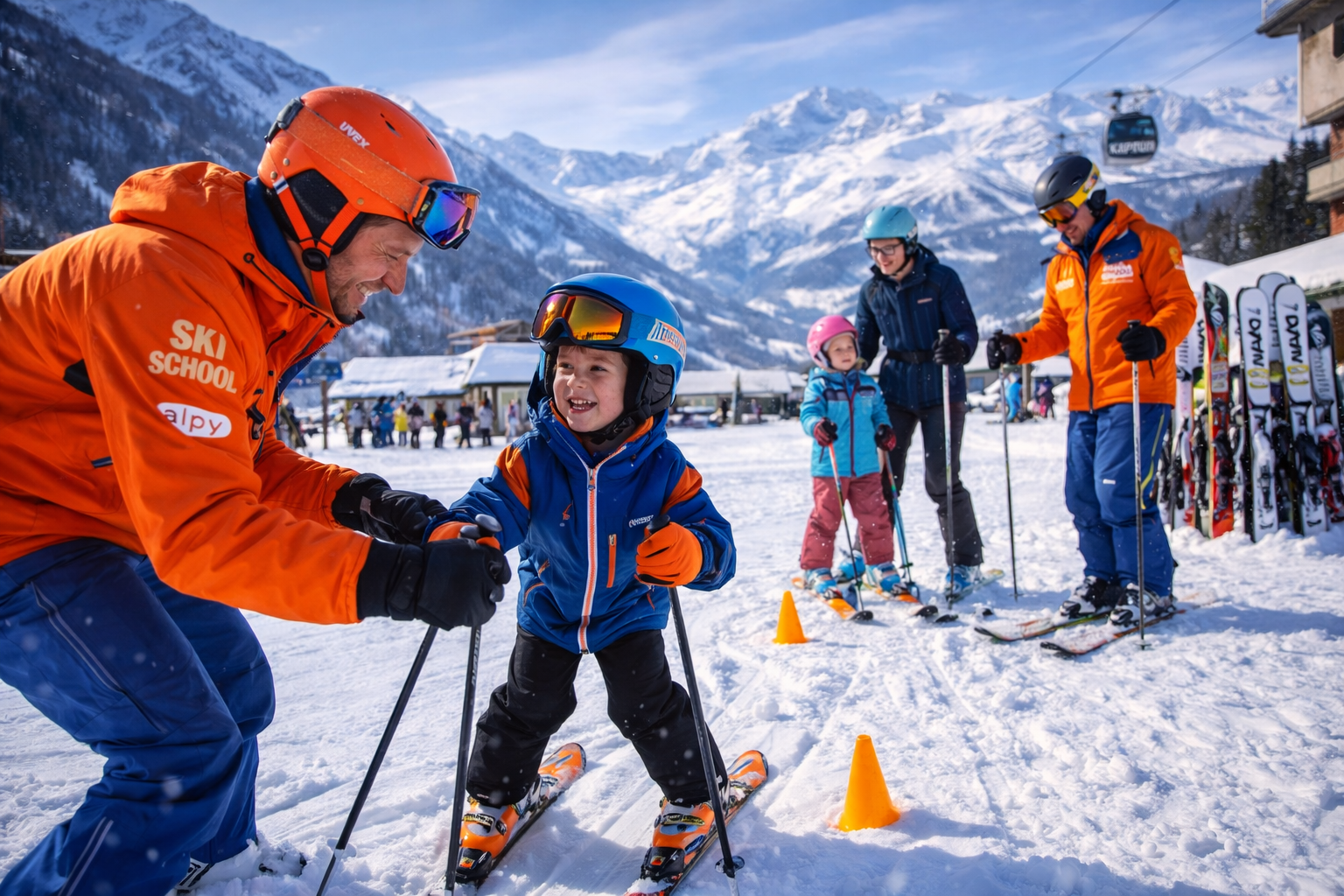
A: Yes — spring conditions are actually ideal for many beginners. Softer afternoon snow is more forgiving for falls. Quieter slopes mean less anxiety about fast skiers passing close by. Warmer temperatures make standing on skis far more comfortable than in January. The main consideration is starting skiing in the morning when conditions are firmer and more predictable. Read more about it.
Q: How far in advance should I book a last-minute spring ski trip?
A: “Last-minute” in skiing terms typically means booking 1–4 weeks before travel. The sweet spot is 1–2 weeks out for the best accommodation deals, while booking ski rental with alpy.com even further in advance (a few weeks) to guarantee the right equipment sizes. Lift passes in spring can generally be bought on arrival at the resort.
Ready to Book Your Spring Alps Ski Deal?
Spring skiing (March-May 2026) is your opportunity to experience the Alps at their best while saving significantly. Here’s your action plan:
✓ Choose your month: Late March, April, or early May for optimal value
✓ Pick your midweek dates: Monday-Friday for lowest prices
✓ Select high-altitude resorts: 2,000m+ for reliable spring snow
✓ Book ski rentals online: Save 65% vs. in-resort prices
Why alpy.com for Spring Skiing?
At alpy.com, booking spring ski rentals is simple:
– Browse 500+ ski rental options across Austria, France, Italy & Switzerland
– Lock in prices up to 65% cheaper than in-resort rates
– Cancel free if plans change
– Guarantee your equipment size and quality