
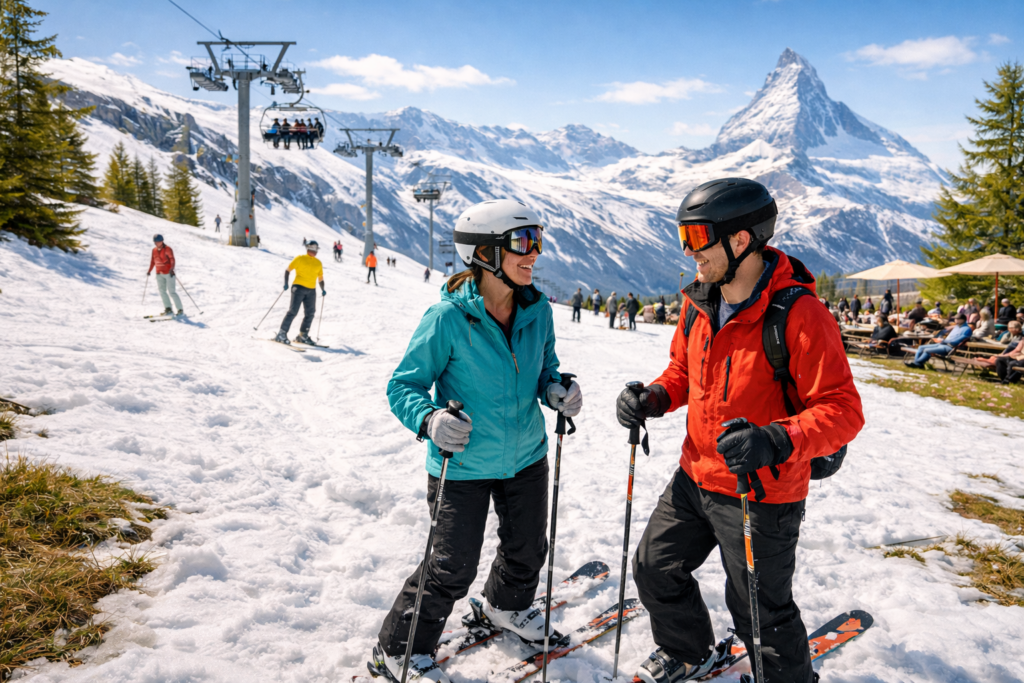
Imagine stepping onto a wide, sunny piste with warm sunlight on your face, a blue sky overhead, and almost no queue at the lift. That’s spring skiing — and for beginners, it might just be the perfect introduction to the mountains. If you’ve been putting off your first ski holiday because winter felt too cold, too expensive, or too crowded, April could be your ideal window.
In this guide, we’ll walk you through everything you need to know about spring skiing as a beginner: what conditions to expect, how to dress, which resorts stay open in April, and how to make the most of your first time on skis in the late season. And yes — this includes what to do if the snow gets a little slushy by afternoon.
Why Spring is Actually a Great Time to Learn to Ski
Most first-timers assume that the “best” ski season is January or February — peak winter, heavy snowfall, perfect conditions. While that’s true for experienced skiers chasing powder, beginners often find spring skiing far more enjoyable. Here’s why.
Firstly, the weather is simply more comfortable. You don’t need to bundle up in extreme cold-weather gear just to stand at the top of a nursery slope. Spring temperatures are mild enough to ski comfortably without freezing between attempts — and when you’re a beginner, you spend a lot of time standing still, picking yourself up, and practising the same turn over and over. Being warm makes all of that far easier.
Secondly, spring snow is forgiving. Hard-packed winter pistes can be unforgiving if you fall, which beginners inevitably do. Corn snow — the soft, granular surface typical of spring — cushions falls and allows skis to glide smoothly. There’s less ice, less bounce, and more control at slower speeds.
Thirdly, resorts are quieter. Peak-season weeks in February are busy, queues are long, and ski schools fill up fast. In April, you’ll find shorter queues, more space on the beginner slopes, and easier access to instruction.
What Type of Snow Should Beginners Expect in Spring?
Spring snow goes through a daily cycle that’s worth understanding before you head out:
- Morning (8am–11am): Snow is firm and may feel slightly icy from overnight freezing. Edges grip well. This is the best time for beginners to practise turning and stopping — the surface is predictable and fast.
- Midday (11am–2pm): The sun softens the surface. Corn snow begins to form — a granular, rounded crystal that’s gentle underfoot and excellent for learning.
- Afternoon (2pm–close): Snow becomes soft and slushy at lower altitudes. Progress up the mountain for firmer snow, or call it a day and enjoy an après-ski terrace in the sun.
Alpy Tip: At high-altitude resorts like Val Thorens or Tignes, upper slopes stay in better condition throughout the day. When booking your ski or snowboard rental via alpy.com, consider adding a helmet and poles to your package — the affordable all-in bundle options are ideal for beginners.
How to Dress for Spring Skiing: The Right Layering Strategy
Spring skiing demands a different wardrobe approach than winter. The goal is versatility — being warm in the morning and comfortable in the afternoon sun without overheating.
Base layer
A moisture-wicking thermal base layer is essential. It keeps sweat away from your skin, preventing you from getting chilled when you stop moving. Merino wool or technical synthetic fabrics work best. Avoid cotton entirely — it absorbs moisture and stays damp.
Mid layer
A lightweight fleece or thin insulated jacket. In spring, you may find you don’t need this at all by noon — pack it in a small day bag or keep it in the ski locker.
Outer layer
A waterproof, breathable ski jacket and trousers with underarm ventilation zips (pit zips). You’ll use these constantly as the day warms up. Look for a jacket with at least one inner pocket for your phone — screens and cold don’t mix.
Accessories
Sunglasses (category 3 or 4 lens — snow reflects up to 80% of UV rays), sunscreen SPF 50+ applied generously and reapplied every 2 hours, and a lightweight pair of waterproof gloves. Heavy winter mittens are overkill in April; a thin glove shell over liner gloves is ideal.
Which European Resorts Are Open for Spring Skiing in April?
Not all resorts stay open past March, but high-altitude destinations reliably offer excellent conditions well into April and even May. Here are the best options for beginners:
- Val Thorens, France (2,300–3,230m): One of Europe’s highest ski resorts, open until May 3, 2026. Excellent beginner areas at altitude with long gentle runs. Strong ski school infrastructure.
- Tignes, France (1,550–3,456m): Glacier skiing guarantees snow through April and into May. Wide, well-groomed beginner slopes in La Palafour area. Part of the Espace Killy ski area with Val d’Isère.
- Zermatt, Switzerland (1,620–3,883m): Year-round skiing on the Matterhorn Glacier Paradise. Premium prices, but spectacular scenery and guaranteed snow conditions for April beginners.
- Livigno, Italy (1,816–2,797m): Duty-free status makes it significantly more affordable. Wide, gentle pistes ideal for beginners, open typically until late April. Great value for families and budget skiers.
- Kaprun/Kitzsteinhorn, Austria (975–3,029m): Glacier area above 2,000m stays open late. Good beginner facilities and Austria’s famously friendly ski schools.
Alpy Tip: All of these resorts have partnered rental shops listed on alpy.com. Book your gear in advance for the best availability and to lock in early-booking savings of up to 65% compared to on-site rental prices.
Top Tips for Your First Time Skiing in Spring
1. Book ski lessons — especially in spring
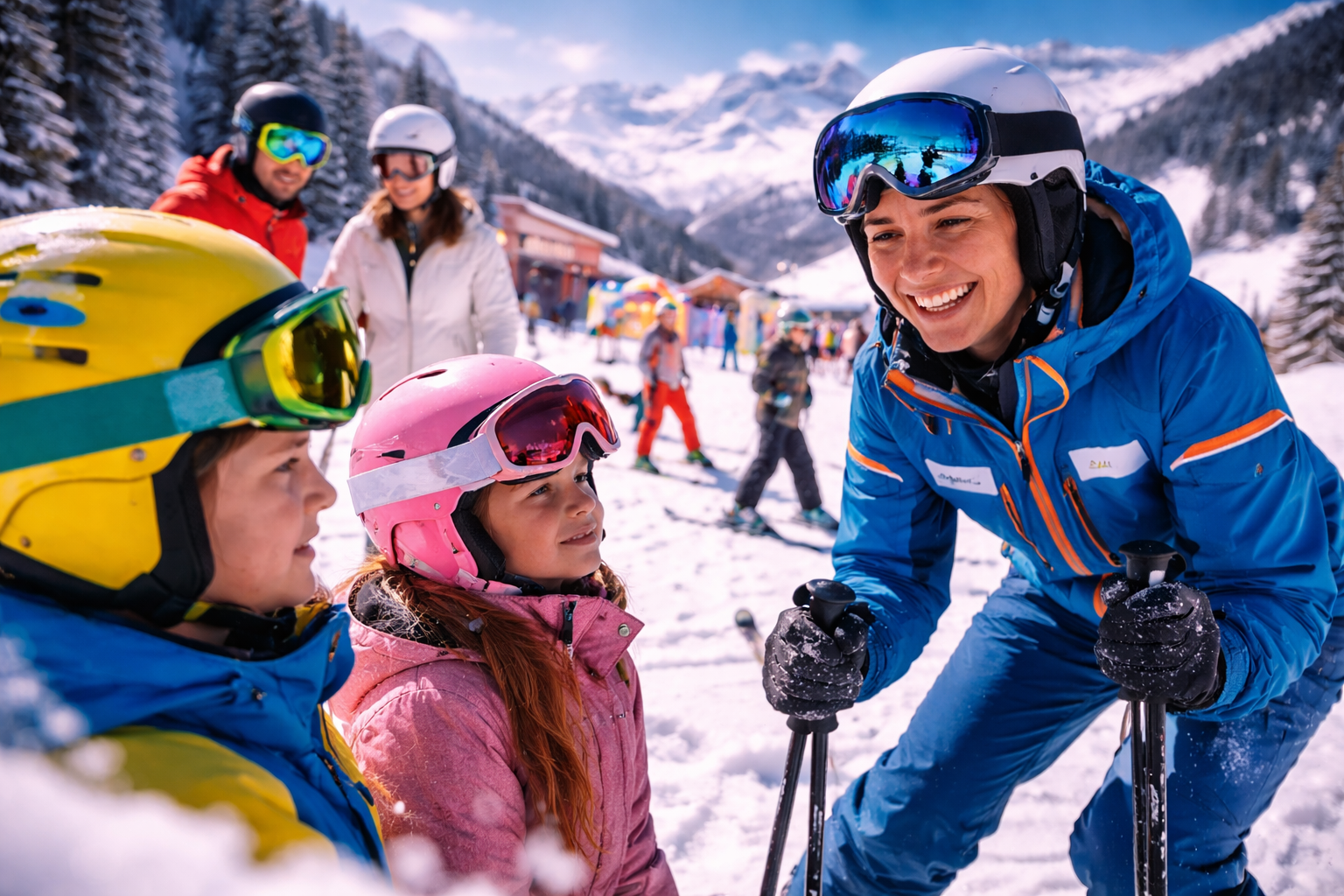
Even in spring, ski schools fill up. Book your beginner group lessons in advance. A good instructor will teach you the correct technique for spring conditions, including how to handle the afternoon slush. Most ski schools offer half-day sessions specifically designed around the spring schedule: morning lessons when snow is at its best.
2. Start early, finish at lunch
The golden rule of spring skiing: hit the slopes when they open (typically 8:30–9am) and plan to wrap up by 1–2pm. Morning conditions are the best of the day — firm, predictable, and less crowded. Use the afternoon for lunch on a sunny terrace, a rest, or a leisurely walk around the resort.
3. Protect your skin seriously
Snow reflects up to 80% of UV radiation, and at altitude the sun is significantly stronger than at sea level. Apply SPF 50+ sunscreen before you even put your ski boots on, and reapply every 2 hours — including on your lips, ears, and the underside of your chin (often forgotten, often burned). A sunburn at altitude can ruin the second half of your trip.
4. Stay hydrated
Altitude, sun, and physical effort combine to dehydrate you faster than you’d expect. Carry a water bottle and drink regularly — even if you don’t feel thirsty. Dehydration causes fatigue and affects coordination, both of which make learning to ski harder and less fun.
5. Rent your gear — don’t buy yet
As a beginner, buying ski equipment is premature. Your technique will evolve rapidly in the first few seasons, and the equipment that suits you will change too. Renting via alpy.com gives you access to well-maintained, properly-fitted gear at a fraction of the on-site price — and you can try different ski types across different trips without any commitment.
Is It Worth Skiing in April? Common Concerns Answered
Some beginners worry that spring skiing means bad snow, closed slopes, or a “second-rate” experience. In reality, many experienced skiers actively prefer spring for its combination of reliable snow at altitude, fewer crowds, lower costs, and the sheer pleasure of skiing in sunshine. The key is to choose the right resort — high altitude, glacier access if possible — and to ski at the right time of day.
FAQ: Spring Skiing for Beginners
Q: Is spring a good time to learn to ski for the first time?
A: Yes — many instructors consider spring an ideal time for beginners. Milder temperatures mean you’re more comfortable on the slopes, corn snow is softer and more forgiving than hard-packed winter pistes, and resorts are less crowded. Choose a high-altitude resort with guaranteed snow and book morning lessons to make the most of the best conditions.
Q: What is corn snow and is it good for beginners?
A: Corn snow forms when snow goes through repeated freeze-thaw cycles, creating rounded, granular crystals. It’s considered excellent for beginners because it’s soft, predictable, and slows falls better than icy or hard-packed surfaces. Corn snow typically appears from mid-morning onwards on spring days.
Q: What do I wear spring skiing if I don’t own ski clothes?
A: Focus on layering: a moisture-wicking base layer, a light fleece or thin insulated jacket, and a waterproof outer shell. Ski gloves, goggles or good-quality sunglasses (category 3–4), and a helmet complete the essentials. You can rent helmets through alpy.com alongside your skis. Do not wear cotton — it absorbs sweat and leaves you cold and uncomfortable.
Q: Are ski rentals more expensive in spring?
A: No — spring rental prices are typically equal to or slightly lower than peak season. The biggest savings come from booking online in advance. Booking your ski or snowboard rental via alpy.com before your trip can save you up to 65% compared to walking into a shop at the resort.
Q: Which European ski resorts are still open in April 2026?
A: High-altitude resorts including Val Thorens (open until May 3, 2026), Tignes, Zermatt, Livigno, and Kaprun/Kitzsteinhorn all offer reliable conditions in April. Check individual resort websites for confirmed closing dates, as these can vary depending on snowpack each season.
Q: Is it safe to ski in spring as a total beginner?
A: Spring skiing is no more dangerous than skiing in winter, and the softer snow conditions can actually make falls less painful. Wear a helmet (mandatory in several countries, strongly recommended everywhere), take lessons from a qualified instructor, and stick to beginner-designated green and blue runs. Avoid venturing onto steep or off-piste terrain.
Conclusion: Don’t Let the Season Stop You
Spring skiing is one of those well-kept secrets of the mountain world — experienced skiers know it, resort owners love it, and beginners who try it often say it was the best decision they made. Softer snow, lighter crowds, warmer sunshine, and meaningful savings on lift passes and accommodation all make April a compelling time to make your first tracks. Pick a high-altitude resort, book morning lessons, slather on the sunscreen, and go.
Ready to hit the slopes stress-free? Book your ski or snowboard rental on alpy.com and save up to 65% compared to renting on-site — with free cancellation and no hidden fees.